L-R: Ching Neng Bin, Chew Leng Soon, Chan Meng Fye and Lee Kam Boon at Tianfu Square in Chengdu, China.
Backpacking 26 days through 6 provinces in China Sichuan, Chongqing, Hubei, Hunan, Guizhou, Guangxi and 3 days in Hanoi, North Vietnam (29 Mar - 26 Apr 2011).
Day 1 (29.03.2011) Malaysia to Chengdu (13°C – 19°C)
Ni Hao! Greetings from China. Departing LCCT at 1.30pm, four of us (Ching Neng Bin, Chew Leng Soon, Chan Meng Fye and Lee Kam Boon) so called ‘early birds’ arrived at Chengdu airport at 6pm. The other six mates would come the next 3 days. We took a van for Y60 to the city and stayed at Xinyuan Hotel which is located in the centre of the city.
We got a local travel agency to arrange a 2 day tour to Leshan and Emeishan for Y650 – inclusive of all expenses (one night hotel, food, entrance fee, transport and tour guide). Tonight we walked around town and had dinner at a restaurant – Y240 for 4pax (crab & prawn porridge with mushroom, fish intestine, roast duck, mixed vegetable, clay port seafood, and fried spring-roll.
Sichuan is a southwestern Chinese province that contains a stretch of Asia’s longest river, the Yangtze. The region is the home of giant pandas, which visitors can observe at Bifengxia Panda Base and other reserves. Chengdu, the provincial capital, is a center for traditional Sichuanese opera, which include fire-breathing and sleight-of-hand mask changes.
Stayed at Xinyuan Hotel – Y80 a room with breakfast

Our flight departing LCCT at 1.30pm, and four of us (Ching Neng Bin, Chew Leng Soon, Chan Meng Fye, Lee Kam Boon) so called ‘early birds’ arrived at Chengdu airport at 6pm.

We took a van for Y60 to the city and stayed at Xinyuan Hotel which is located in the centre of Chengdu city. L-R: Chew Leng Soon, Chan Meng Fye and Ching Neng Bin.

A very modern Chengdu commercial centre along Chunxi Lu Strreet.

If New York has Times Square, Chengdu has Chunxi Lu. It has several hundred stores and is surrounded by several large malls selling everything from very basic items to luxury goods. You must really see this shopping street at night when it is brought to life by thousands of lights, music and giant television screens.

Beautiful copper tooling art on the Chunxi Street walkway in Chengdu.

Beautiful copper tooling art on the Chunxi Street walkway in Chengdu.
Day 2 (30.03.2011) Chengdu to Leshan to Emei City Woke up at 5.15am and had own breakfast in the room. Bus pickup at 6.40am for a 2 hours drive to Leshan to visit the Leshan Grand Buddha.
Entrance fee is Y90. Leshan's pride is the serene Grand Buddha carved
into a cliff face overlooking the confluence of Dadu River and Min
River. The other sight was the Oriental Buddha Park (required a separate
Y50 ticket). It has 3000 Buddha statues and figurines including a 170m
long reclining Buddha, said to be the world’s longest. We visited the
Ebony Museum on the way to Emei City and later checked in to hotel for
dinner at 6pm.

Bus pickup at 6.40am for a 2 hours drive to Leshan to visit the Leshan Grand Buddha.

Vegetables drying on the country side road - very unhygienic.

Giant writing on the cliff wall at Leshan Giant Buddha scenic area.

Dragon Pool and Tiger Lair at Leshan Giant Buddha scenic area.

According to legend Lingyan Hill, located in the Leshan Giant Buddha Scenic Area, with its dense forest and cave offered good shelter for a white tiger, while at the foot of the hill, the three rivers provided a black dragon with waves to play in. The dragon and tiger after hearing the Buddhist sutras decided to dedicate themselves to Buddhism and became guardians to protects Buddhists. Cen Shen a Tang Dynasty poet wrote while visiting Lingyan Hill "Wind blows over the tiger's lair and rain drops to fill the dragon's pool".

Dragon Pool and Tiger Lair at Leshan Giant Buddha scenic area.

The walk up to a Chinese temple at Leshan Giant Buddha scenic area. Lee Kam Boon in yellow jacket on the right.

The walk up to a Chinese temple at Leshan Giant Buddha scenic area.

The Chinese temple at Leshan Giant Buddha scenic area.

The Chinese temple at Leshan Giant Buddha scenic area.

The Chinese temple at Leshan Giant Buddha scenic area.

Walking down the cliff-face of the Leshan Giant Buddha scenic area.

The view of the Buddha's feet from the right cliff of Leshan Giant Buddha.

View of Leshan City and the confluence of Min River and Dadu River from the right cliff-top of Leshan Giant Buddha.

Walking down the cliff-face of the Leshan Giant Buddha scenic area. Lee Kam Boon in yellow jacket on the right.

The view of Leshan Giant Buddha from the bottom of the cliff. A Buddhist monk called Haitong started it in AD713 - took 90 years to complete.

Leshan Giant Buddha at 71m tall and his ears stretch for 7m with his shoulder span at 28m.

Leshan Giant Buddha at 71m tall and his ears stretch for 7m with his shoulder span at 28m.

Each of the Leshan Giant Buddha big toe is 8.5m long.

The narrow plank road carved on the right cliff at Leshan Giant Buddha.

Plenty of fishes in the pond at Leshan Giant Buddha scenic area.

A door entrance at Leshan Giant Buddha scenic area.

A moon-gate entrance at Leshan Giant Buddha scenic area.

An ancient tea houses at Leshan Giant Buddha scenic area.

Cafes and restaurants at Leshan Giant Buddha scenic area.

The Oriental Buddha Park has a collection of 3000 Buddha images.

The long steps down from Dongfang Fodu Gongyuan (Oriental Buddha Park).

The 170m-long reclining Buddha is on the hill behind the bridge at Leshan Giant Buddha scenic area.

The eastern Oriental Buddha park entrance to Leshan Grand Buddha. Oriental Buddha Park (Dongfang Fodu) holds more than 3000 Buddhist statues, including a 170 meter-long reclining Buddha, the largest in the world. The Mahaoya Tomb Mausoleum (Mahaoyamu Museum) is also located on the mountain.

Ebony Cultural Museum in Leshan - not allowed to take photos inside.

The ebony Museum is a thematic museum which is the main content of ebony sculpture art, which is a collection of research, exhibition and exhibition of ebony sculpture.
Day 3 (31.03.2011) Emei City to Emei Shan to Chengdu
After breakfast at 6am, the bus picked us up at 7am to the Emei Shan
main entrance. Entrance ticket at Y150. Here the park-bus took us up
the mountain on a winding 70km road. We could see the gorges and some
snow on the ground. As we went higher up we could see more snow.
On arrival at the Leidongping Bus station (2,430m), we all had to buy
the snow sock or spike (Y15) to put on our shoes to prevent skidding on
ice. We had to walk 15 minutes up the steps to the cable car station at
Jieyin Hall. Walking up the steps, we saw some monkeys receiving food
from tourist. We were at the cable car station at 9am and a 5 minutes
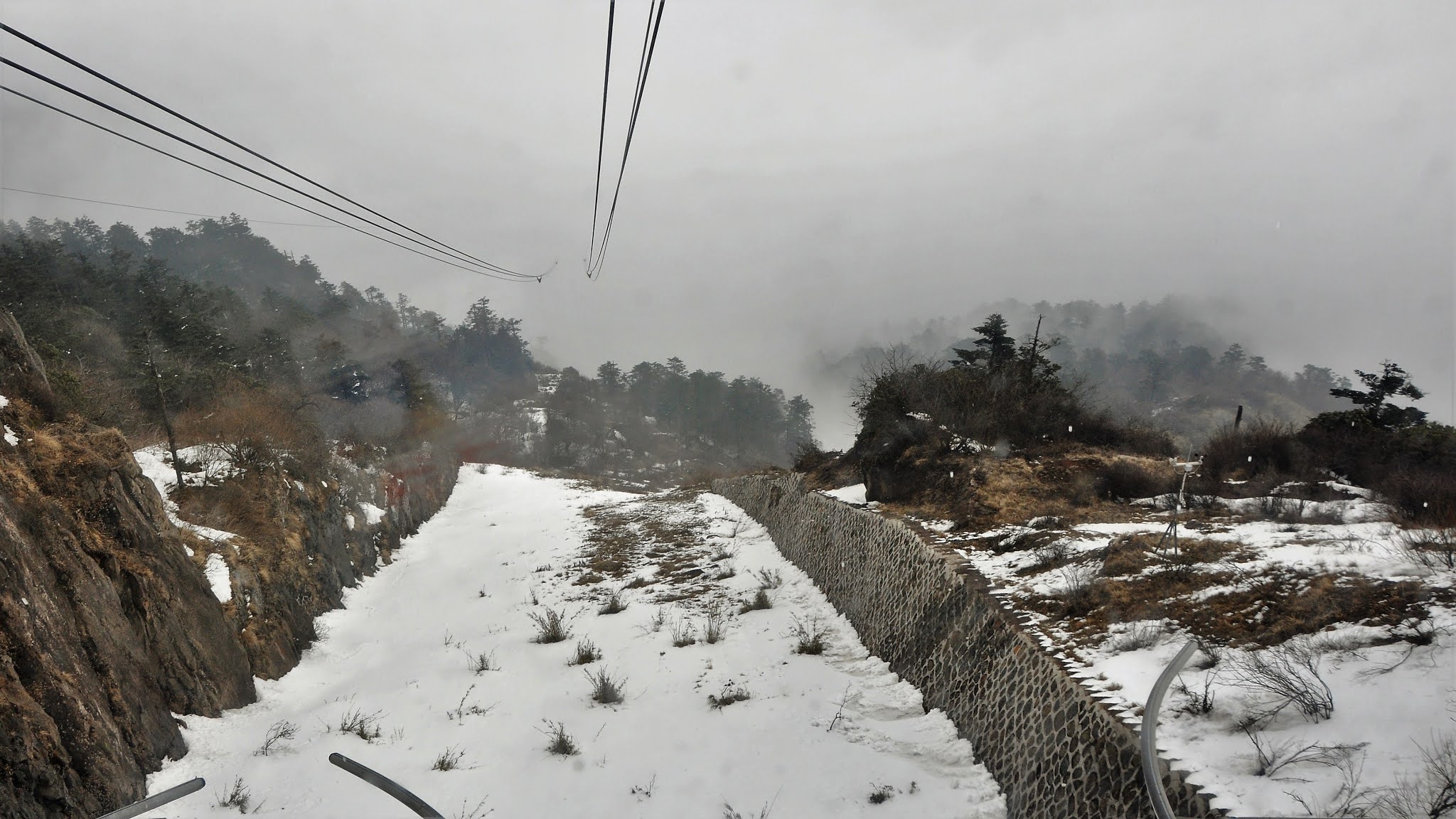
cable car (Y65) ride took us to the peak at 3,079m. Here at the Golden
Summit (Jinding) temple, we were amazed by the magnificent 4 face Puxian
Buddha statute sitting on 4 elephants. From here we could also see the
other peaks. We spent about 45 minutes here and took the cable car (Y55)
back to Leidongping Bus station (2430m). We had lunch at a village on
our way down the mountain.
The bus then took us to Wannian Bus
Station. Here you can either hike or take the cable car (Y40) up to
Wannian Temple (1,020m). The entrance fee is Y120. However, we hiked up
for about 30minutes to reach Wannian Temple.
The returned
journey was hiking down through the White Dragon Cave, Qingyin Pavilion
and Niuxin Pavilion before reaching Wuxiangang Bus Station. The tourist
bus took us back to Xinyuan Hotel in Chengdu city reaching at 9pm.
Sleeping at Xinyuan Hotel – Y100 a room for two with breakfast.

After breakfast at 6am, the bus picked us up at 7am to the Emei Shan
main entrance. Entrance ticket at Y150. Here the park-bus took us up
the mountain on a winding 70km road. We could see the gorges and some
snow on the ground. As we went higher up we could see more snow.

On arrival at the Leidongping Bus station (2,430m), we all had to buy
the snow sock or spike (Y15) to put on our shoes to prevent skidding on
ice at Emei Shan.

We walked 15 minutes up the steps to the Jieyin Hall cable car station at Emei Shan.

We walked 15 minutes up the steps to the Jieyin Hall cable car station at Emei Shan.

We walked up the steps to the Jieyin Hall cable car station at Emei Shan.

Walking up the steps, we saw some monkeys receiving food from tourist at Emei Shan.

Walking up the steps, we saw some monkeys receiving food from tourist at Emei Shan.

Naughty macaque monkeys are very accustomed to tourists at Emei Shan.

Chew Leng Soon walked up the steps to the Jieyin Hall cable car station at Emei Shan.

Lee Kam Boon walked up the steps to the Jieyin Hall cable car station at Emei Shan.

The view of the the winding road from Jinyin Palace at Emei Shan.

We were at the cable car station at 9am and a 5 minutes
cable car (Y65) ride took us to the peak at 3,079m.

The view of the Sheshen Cliff and the summit from Woyun cable car station at Emei Shan.

Ching Neng Bin at the Golden Summit peak (3,079m) at Emei Shan.

The Golden Summit Temples at Emei Shan.

Huazang Temple was originally built in 1377 during the Ming Dynasty. It is mainly composed of Maitreya Hall, Daxiong Hall and Bodhisattva Samantabhadra Hall. With an altitude of 3,077 meters, it is the highest Chinese Buddhist Temple. Out of Huazang Temple, Buddhists never miss the Ten-faced Puxian Stupa which stands 48 meters tall, weighs 660 tons and is surrounded by urns containing the ashes of Buddhists. This stupa is the highest golden Buddha in the world.

Ching Neng Bin, Chew Leng Soon, Chan Meng Fye and Lee Kam Boon at the massive statue of
Samantabhadra at the summit of Mount Emei.

The massive statue of
Samantabhadra at the summit of Mount Emei.

The cliff view at the summit of Mount Emei.
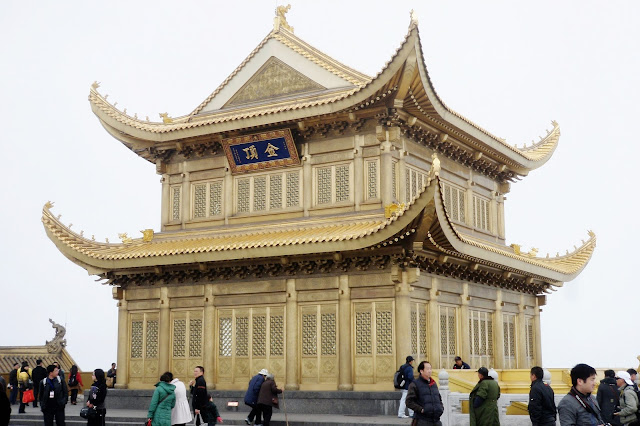
The Golden Summit Temples at Emei Shan.

The Golden Summit Temples at Emei Shan.

The views from the Golden Summit at an elevation of 3,077 meters above sea level steals the glory.

At the entrance to Wannian Temple at Emei Shan.

The start of the 2km climb up to Wannian Temple at Emei Shan.

The start of the 2km climb up to Wannian Temple at Emei Shan.

An ancient house on the 2km climb up to Wannian Temple at Emei Shan.

Lee Kam Boon with a Tibetan monk on the 2km climb up to Wannian Temple at Emei Shan.

Wannian Temple at 1,020m - reconstructed in the 9th century, it is the oldest remaining Emei temple. It's dedicated to the man on the white elephant, the Bodhisattva Puxian, who is the protector of the mountain. This 8.5m high statue cast in copper and bronze dates from AD980 and weighs an estimated 62,000 kg.

Wannian Temple at Emei Shan.

Lee Kam Boon at the Majestic Hall (巍峨宝殿) at Wannian Temple Emei Shan.

Walking down the Emei Shan hill from Wannian Temple.
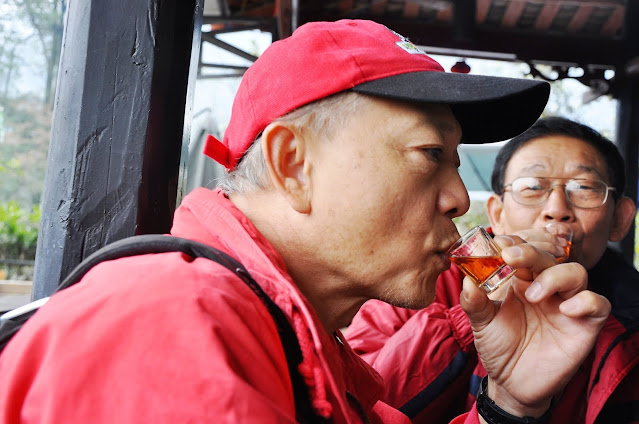
Ching Neng Bin and Chan Meng Fai had a cup of snake wine at the tea shop in Emei Shan.

A round moon-gate entrance at the temple in Emei Shan.

Qingyin Pavilion, at an altitude of 710 meters, is located in the core area of Mount Emei, 30 minutes' walk from Wuxiangang Parking lot. The temple is not big, however, it's very beautiful, and it's a classic garden architecture of Buddhist temple in China. There is only one hall to worship Three Saints of Hua-yen, Shakyamuni Buddha in the middle, Manjusri Bodhisattva in the left and Samantabhadra Bodhisattava in the right. Qingyin Pavilion connects Hongchunping, Xianfeng Temple in its left hand and Bailong Cave, Wannian Temple in its right hand, making it a must-visit place during your pilgrimage travel.

The dried up lake and river during the dry season near to Qingyin Pavilion in Emei Shan.

The dried up lake and river during the dry season near to Qingyin Pavilion in Emei Shan.

A worker carring bricks on his back in Emei Shan.

The dried up lake and river during the dry season near to Qingyin Pavilion in Emei Shan.

At the Wuxiangang Bus Station to get back to Chengdu.
Day 4 (01.04.2011) Chengdu (14°C – 22°C) After breakfast we explored the city-square and later check-out of the current hotel and walked 20 minutes to Traffic Inn where we stayed. Here we waited for the other 5 members (regular birds) to join us. It was also our rest day in Chengdu. The 5 members from Malaysia (Lim Peng Peng, Bernard Lee, Cindy Chong, Choo Chiew Chin, See Beow Aun), arrived at 11pm.
Stayed at Traffic Inn Hostel – Y90 a room for 2.

L-R: Chan Meng Fye, Chew Leng Soon, Lee Kam Boon, Ching Neng Bin at city-square in Chengdu, China.

After breakfast we explored the city-square.

After breakfast we explored the city-square and later check-out of the current hotel and walked 20 minutes to Traffic Inn where we stayed.

A friendly staff of Traffic Inn, No.6 Lin Jiang Zhong Lu, Jing Jiang District, Chengdu.

Alex in black jacket, another friendly staff of Chengdu Traffic Inn.

Traffic Inn in Chengdu.

Traffic Inn in Chengdu.

Taking lunch in Chengdu Traffic Inn.

Self entertainment in Chengdu Traffic Inn.
Day 5 (02.04.2011) Chengdu (14°C – 22°C) Breakfast at the Inn was Y5 per pax. Ms.Shannon a Traffic Inn staff took us for a walking city tour. We first walked out to the main road and then took bus No.43 (Y2) to Chengdu People’s Park. We visited the famous Small Alley and had lunch at the Big Alley. We then walked to Mao Statue, Tian Fu Square and later walked straight back to Traffic Inn Hostel. Bernard and See did not go for the walk as they had to buy our train tickets for Chongqing. Ms.Gan Choi Geok the late bird arrived at 2.30pm from Malaysia that makes a total of 10 of us.
We had a very good dinner at the same Cantonese restaurant we ate last year. We then walked to Jinli Ancient Street. Stayed at Traffic Inn Hostel – Y90 a room for 2

L-R: Lim Peng Peng, Bernard Lee, Cindy Chong, Ching Neng Bin, Chew Leng Soon, Choo Chiew Chin, See Beow Aun, Chan Meng Fye, at Traffic Inn, Chengdu.

At Traffic Inn, Chengdu.

Ms.Shannon a Traffic Inn staff took us for a walking city tour. We first
walked out to the main road and then took bus No.43 (Y2) to Chengdu
People’s Park.

Ching Neng Bin with Shannon a staff of Traffic Inn sitting in the bus for Chengdu People's Park.

At the entrance of the Chengdu People's Park located on Shaocheng Road in the downtown area. Built in 1911, the park covers a total area of 112,639 square meters which integrates heritage preservation with entertainment.

Chengdu People's Park was filled with locals dancing, singing, strolling and also practicing taichi.

Chengdu People's Park was filled with locals playing Hulusi. The Hulusi is a free reed wind solo instrument that is very popular
among the Dai and the Yi minorities in southwest Yunnan provinces. It is
made of three bamboo pipes and a gourd chest; the center pipe has
finger holes and the outer two are drone pipes. Hulusi has very pure,
clarinet-like sound and is ideal for expressing soft and tender
feelings.

Taking photo with the Hulusi musicians at Chengdu People's Park.

Ching Neng Bin trying to blow the Hulusi wind solo instrument at Chengdu People's Park.
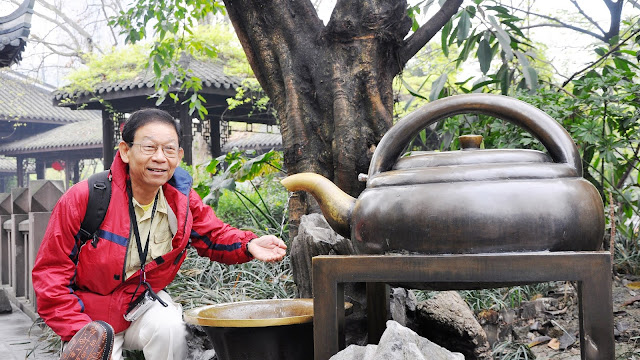
Chan Meng Fye with the big tea-pot at a tea-house of ancient architecture at Chengdu People's Park.

The snack food at Chengdu People's Park.

Eggs? Pancakes? Either way, they look scrumptious at Chengdu People's Park street food corner.

Chew Leng Soon eating snack food at Chengdu People's Park.

Cindy Chong eating snack food at Chengdu People's Park.

We visited the famous Small Alley and had lunch at the Big Alley in Chengdu. Kuanzhai Alley, also known as “Wide and Narrow Alley” or “Kuanzhaixiangzi Alley”, consists of three historic paralleled alleys from Qing dynasty. Ancient style buildings, local Chengdu life, delicious Sichuan snacks, exquisite Sichuan handicrafts, etc. make it one of the most attractive places in Chengdu.

The entrance to Big and Small Alley - souvenir hunting in restored street and a taste of old Chengdu.

Kuan (宽) Alley in Chengdu.

Lee Kam Boon at Kuan (宽) Alley in Chengdu.

Ching Neng Bin at Kuan (宽) Alley in Chengdu.

Starbucks Coffee at Kuan (宽) Alley in Chengdu.

Kuan (宽) Alley is the district of leisure where ancient life of Chengdu people is reproduced. It is said that military officers of high status lived here then and they went out by carriage, so Kuan Alley is built with a width of 7-8 meters. Nowadays, wandering along this alley, you can appreciate more than 20 old courtyards and ancient doors of exquisite decorations, like “Kai Lu” that is one of the most representative doors in Kuanzhai Alley.

The living statues is certainly the way to go at the Big Alley in Chengdu.

The living statues is certainly the way to go at the Big Alley in Chengdu.

Musical shop at Kuan (宽) Alley in Chengdu.

Every corner in Kuan Alley shows the nostalgic feature, so you can choose a tea house to taste the famous covered-bowl tea or try the world famous Sichuan cuisine in a restaurant to feel the old life of Chengdu.

The “Horse Hitching Statue”(拴马石) is also a well-known spot in Kuanzhai Alley.

Here in Jing Alley, you can feel both the traditional history and modern culture. A wall of 500 meters long is standing to exhibit the photos of folk life, and there is another same long wall for the historical culture show.

A wedding photo shoot at Jing Alley in Chengdu.

An elderly man smoking with a long Chinese smoking pipe at Jing Alley in Chengdu.

An elderly man at Kuanzhai Alley in Chengdu.

An elderly woman at Kuanzhai Alley in Chengdu.

Every corner in Kuan Alley shows the nostalgic feature, so you can
choose a tea house to taste the famous covered-bowl tea or try the world
famous Sichuan cuisine in a restaurant to feel the old life of Chengdu.

We had lunch at the Big Alley in Chengdu.

We had lunch at the Big Alley in Chengdu.

The living statues is certainly the way to go at the Big Alley in Chengdu.

Ching Neng Bin and Lee Kam Boon at a courtyard in Kuan Alley Chengdu.

Tianfu Square, Chengdu.

The Mao Zedong statue is a marble sculpture stands 30m tall and depicts Mao Zedong with an outstretched arm located in Tianfu Square, Chengdu.

L-R: Ching Neng Bin, Chew Leng Soon, Chan Meng Fye and Lee Kam Boon at Tianfu Square in Chengdu, China.

Tianfu Square is just opposite of Chairman Mao statue. Shopping and subway system is located directly under the square.

Nanhe River runs through Chengdu.

We had very good dinner at this same Cantonese restaurant we ate in 2010 in Chengdu.

We had very good dinner at this same Cantonese restaurant we ate in 2010 in Chengdu.

A beautiful sculpture in Chengdu.

After dinner, we walked towards Jinlin Ancient Street passing by this eating square in Chengdu.

Jinli Street is another ancient street a good place to go and take pictures, try some unusual snacks, buy souvenirs and enjoy the environment. It has night-time bars, restaurants and nightclubs. Next to Jinli Street is the Wuhou Temple.
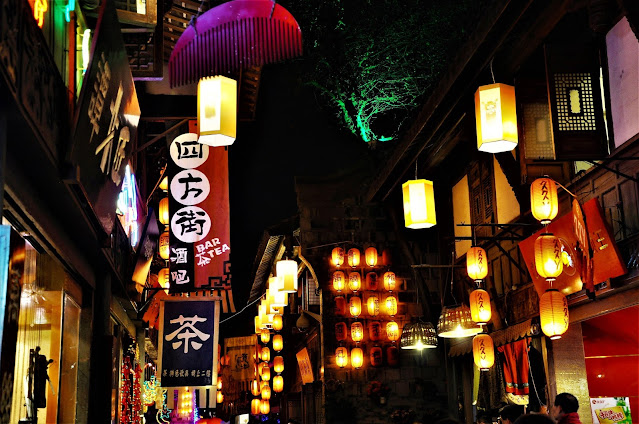
Jinli Street is another ancient street a good place to go and take pictures.

This guy selling tickets for the face changing show at Jinli Street in Chengdu.

Jinli Street is another ancient street a good place to go and take pictures.

Jinli Street is another ancient street a good place to go and take pictures.

Jinli Street is another ancient street a good place to go and take pictures.

A ship-themed restaurant in Chengdu, China. End of part 1.
Air-Asia : KL - Chengdu is RM304-00
5 days total expenses in China was RM665 per person
///Backpacking Adventure




 Ching Bee Geok delivering the President's Speech at ACS OPA 35th Annual Dinner 2011.