Annapurna Base Camp (ABC) - 07 to 21 October 2013

Standing (L-R) - Mohd. Shahrul Mohana Dass, Tan Kim Chan, Wong Kok Seong, Lim Min Heng, Lim Ka Tin, Song Poh, Datin Yogaranee Balaratnam, Sitta V. Kanagasabai, Andrey Avtukh, Ching Neng Bin. In front - Chief Guide Lamababu Pinasha Sherpa and 2 assistant guide - Bikas Tamang and Pemba Sherpa. Photo taken at Annapurna Base Camp.
Day 01 (07.10.2013) KL to Kathmandu, Nepal
Namaste! Nine Malaysian trekkers were on AirAsia flight D7-192, when Captain Kelvin Lai informed us through the PA system that we were on 3,400 km trip to Kathmandu, flying at 41,000 ft with 4 hours 10 minutes of flying time. On arrival at the Tribhuvan International Airport (9.55am) we did our 15day visa (US25). We were well received by the representatives of Explore Himalaya and transferred us to Marshyangdi Hotel in the tourist district of Thamel with a short briefing. We walked out for lunch and changed money – US1=Rp.99. This October month visit to Nepal coincided with the Nepali Dasain festival which celebrated for 15 days.
Mr Andrey Avtukh a Russian, joined us to form a ten member team for the trek. In the afternoon we had a guided tour of Kathmandu visiting Boudhanath and the Basantapur Durbar Square. From here we walked through the crowded narrow streets to get back to Hotel and had another trekking briefing at 6.30pm.
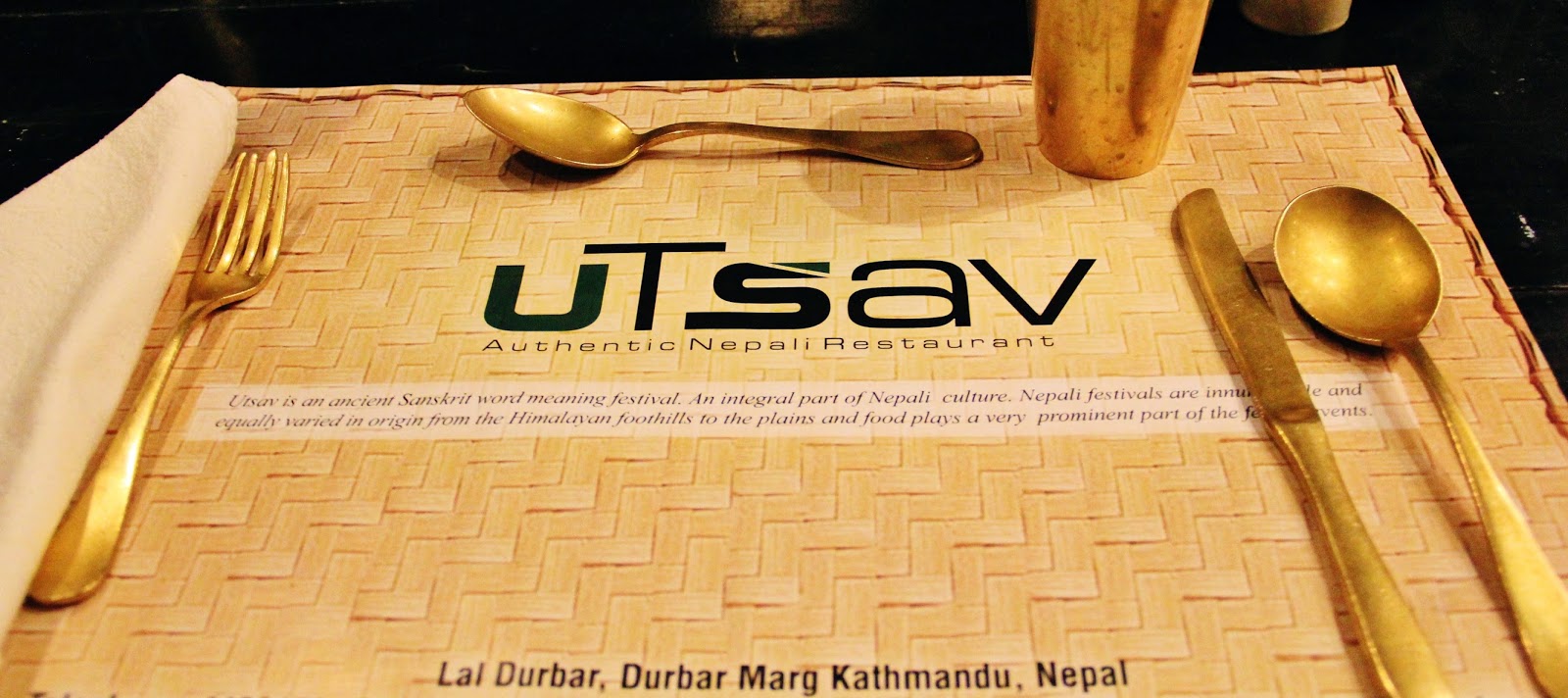
At 7.00pm we had a special welcoming dinner at Utsav Authentic Nepali Restaurant, Lal Durbar with traditional songs and dances. We ate dal bhat a Nepali traditional staple food consists of steamed rice and a cooked lentil soup called dal and bhat means boiled rice. The restaurant ambiance was good with authentic Nepalese food served. Nepalese rice wine was served and we had different kinds of veg cooked differently and wild boar meat was good. Nepalese dances were performed on stage and it was beautiful to join them in the dancing. We all enjoyed it very much.
Sleeping: Marshyangdi Hotel in the tourist district of Thamel, Kathmandu – US90 a room

Explore Himalaya representatives welcomed us with flower garland as we came out of the airport.

KC Tan said: "'Namaste and thank you very much for the flower garland and meeting us."


Shahrul and I with Sabina in front of Marshyangdi Hotel.

A short briefing at the hotel on our daily activities and locations with maps provided.

Our first lunch in Kathmandu - Bryani rice at KC Cafe beside our hotel.

The many shops around Boudhanath stupa selling all kinds of souvenirs.




Day 15 (21.10.2013) Kathmandu to KL
///
Namaste! Nine Malaysian trekkers were on AirAsia flight D7-192, when Captain Kelvin Lai informed us through the PA system that we were on 3,400 km trip to Kathmandu, flying at 41,000 ft with 4 hours 10 minutes of flying time. On arrival at the Tribhuvan International Airport (9.55am) we did our 15day visa (US25). We were well received by the representatives of Explore Himalaya and transferred us to Marshyangdi Hotel in the tourist district of Thamel with a short briefing. We walked out for lunch and changed money – US1=Rp.99. This October month visit to Nepal coincided with the Nepali Dasain festival which celebrated for 15 days.
Mr Andrey Avtukh a Russian, joined us to form a ten member team for the trek. In the afternoon we had a guided tour of Kathmandu visiting Boudhanath and the Basantapur Durbar Square. From here we walked through the crowded narrow streets to get back to Hotel and had another trekking briefing at 6.30pm.
At 7.00pm we had a special welcoming dinner at Utsav Authentic Nepali Restaurant, Lal Durbar with traditional songs and dances. We ate dal bhat a Nepali traditional staple food consists of steamed rice and a cooked lentil soup called dal and bhat means boiled rice. The restaurant ambiance was good with authentic Nepalese food served. Nepalese rice wine was served and we had different kinds of veg cooked differently and wild boar meat was good. Nepalese dances were performed on stage and it was beautiful to join them in the dancing. We all enjoyed it very much.
Sleeping: Marshyangdi Hotel in the tourist district of Thamel, Kathmandu – US90 a room
Explore Himalaya representatives welcomed us with flower garland as we came out of the airport.
KC Tan said: "'Namaste and thank you very much for the flower garland and meeting us."
Shahrul and I with Sabina in front of Marshyangdi Hotel.
A short briefing at the hotel on our daily activities and locations with maps provided.
Our first lunch in Kathmandu - Bryani rice at KC Cafe beside our hotel.
The many shops around Boudhanath stupa selling all kinds of souvenirs.
 |
| The entrance fee is R200 per person and always walk "clockwise" direction. |
 |
| This place is also known as little Tibet settled by Tibetan refugees selling Tibetan handicraft. |
 |
| An English man bowed to respect the teaching of Buddha. |
 |
| The prayer wheel around the Boudhanath stupa. |
 |
| A Tibetan monastery by the Boudhanath stupa. |
 |
| All of us went in to be blessed for a safe trek up the holy mountain of "Annapurna". |
 |
| Boudhanath is one of the holiest Buddhist sites in Kathmandu, Nepal. |
 |
| In 1979 it became a UNESCO World Heritage Site. The Great Stupa of Boudhanath is the focal point of the district. There are at least 29 Tibetan Monasteries around Boudhanath. |
 |
| This place is held holy by both the Buddhist and the Hindus equally. |
 |
| The Boudhanath stupa's massive mandala makes it one of the largest spherical stupa in Nepal. |
 |
| I would love to get up to the many rooftop cafes where you can get great views of the Stupa. |
 |
| Surrounding Boudhanath Stupa are streets and narrow alleys lined with colorful homes, Tibetan Buddhist monasteries, and street vendors. |
 |
| It was fascinating to see pilgrims praying and using the prayer wheels. |
 |
| A happy looking old Tibetan monk set beside a large prayer wheel and watch the world goes by. |
 |
| So many Tibetan paintings and traditional hand painted "Thankas" being sold in this shop. |
 |
| A large 3-D painting for sale - 'The Universe'. |
 |
| A crowded street in Kathmandu - shopping during the Nepali Dasain festival. |
 |
| A roundabout manned by a police officer near Durbar Square. |
 |
| A road side gambling is legal during Nepali Dasain festival. |
 |
| Part of the King palace Hanuman Dhoka is the Basantapur Tower overlooking the Basantapur place. In the adjoining background you can see the Patan Tower and both have beautiful carving. Basantapur Durbar Square are UNESCO World Heritage Sites. |
 |
| This famous Durbar Square was the hub for hippies in the early 70's. |
 |
| Basantapur is the main place for all the souvenir sellers. |
 |
| Early in the morning they come to install their little stalls and to deploy all their marvels. |
 |
| The Newars who are the original population of the valley are famous for their skills and make very nice souvenirs. |
 |
| Most of the souvenirs are specially made for the tourists so don't expect to find genuine antiques or Gurkha knives. A lot of artisans and little factories are situated in Patan and Bhaktapur. |
 |
| Kathmandu Durbar Square or Hanumandhoka Durbar Square is the plaza in front of the old royal palace of the Kathmandu Kingdom. It is one of three Durbar Squares in the Kathmandu Valley in Nepal, all of which are UNESCO World Heritage Sites. |
 |
| The King’s palace Hanuman Dhoka is the white building in Neoclassical style which was only build in the second half of the 19 th century - a huge complex besides several Buildings, Towers, and pagodas and inner court yards. |
 |
| We all had very good hot milk tea at the square (L-R) KC, Ching, Ka Tin, Wong, Lim and Song Poh. |
 |
| Behind me on the left is the the Maju Deval Temple dedicated to Shiva and inside you will find a famous Lingam. The steps of this temple is a favorite place to sit and watch the daily life. |
 |
| The Durbar Square is surrounded with spectacular architecture and vividly showcases the skills of the Newar artists and craftsmen over several centuries. |
 |
| Behind me is the Shiva Parvati Temple. If you carefully look up just below the roof in the window you see Shiva and Parvati. They are overlooking the place, have a look where Shiva is holding his left hand! Again this Temple has fantastic carved windows and two lions guarding the entrance. |
 |
| Take a look where Shiva is holding his left hand! |
 |
| The Bhagwati Temple - on the ground floor you will find many Thanka dealers with high quality thankas and in the upper part is the temple of the goddess Bhagwati. |
 |
| Kathmandu has a wonderful history that dates back to almost 2,500 years back. |
 |
The
Kala Bhairab or black - Anyone who has strolled about the place here, the
coal-black figure of Bhairabs will be unforgettable. The Bhairab is one of the
many forms of Shiva, here in his angry and vengeful form. At
any time people bring here represent their small sacrifices and get a swab of
the powder mixed with oil paint dustup on the forehead, the temple guards was
taken from the statue.
It
is said that the figure had been found already in the correct form as a large
stone in a field north of Kathmandu. It
is also said that who should lie in front of the Kala Bhairab, would bleed to
death immediately. Therefore, the Nepalese ever say when they quarrel and do
not believe the other: say that times before Bhairawa!
|
 |
| Some of the beautiful rooftop figuring. |
 |
| Very busy road with lots of cars, motor bikes on the small street and no pathway, but lots of shops, restaurants, money exchanges, good for shopping and have lunch or dinner there. |
 |
| Vegetables vendors by the busy road side. |
 |
| At 7.00pm we had a special welcoming dinner at Utsav Authentic Nepali Restaurant, Lal Durbar with traditional songs and dancing. The restaurant ambiance was good with Nepalese food served. Nepalese wine was served and we had different kinds of veg cooked differently and wild boar meat was good. |
 |
| Nepalese dances were performed on stage and it was beautiful. We all enjoyed it very much. |
 |
| Dal bhat is a Nepali traditional staple food consists of steamed rice and a cooked lentil soup called dal. Bhat means boiled rice. |
Click below:
Day 15 (21.10.2013) Kathmandu to KL
///

